
Table of Contents
Here is a short video explaining the process, scroll down for detailed ingredients and step by step recipe method. Thanks for coming and do not forget to check other recipes on our homepage.
You know those bananas sitting on your counter right now — the ones that are so spotty and dark you keep walking past them hoping someone else will deal with them? Don’t throw them away. Those bananas are not a problem. They are an opportunity. They are, in fact, the perfect bananas for banana nut bread.
The riper the banana, the sweeter and more intensely flavored it gets. Those almost-rotten, please-just-end-it bananas that no one wants to eat? Those are the ones that make the best loaf. This recipe exists precisely because of them — and it’s been doing its job beautifully since the 1920s and 30s, when people couldn’t afford to waste a single scrap of food.
So let’s put those bananas to work.
What You’ll Need
Dry Ingredients:
- 1¾ cups (210g) all-purpose flour
- 1 teaspoon baking soda
- 1 teaspoon salt
- ½ teaspoon cinnamon (or any warming spice you love)
Wet Ingredients:
- 3 very ripe bananas (medium-sized, or about 430g peeled)
- ½ cup (113g) unsalted butter, room temperature
- ¾ cup (165g) light brown sugar
- 2 large eggs, room temperature
- 1 teaspoon vanilla extract
Optional Add-ins (highly encouraged):
- Up to 1 cup chopped walnuts or pecans, toasted
- ½ cup chocolate chips or chopped chocolate
- A handful of dried fruit
- A sprinkle of sugar on top before baking
Before You Start: Sort Out Your Bananas
Take a good look at your bananas. You want them spotted, dark, and really fragrant — the kind that smell like pure banana the moment you walk into the room. If yours are still on the yellow side with a hint of green, they’re not ready yet.
Here’s a quick fix: pop them onto a baking tray and bake at 350°F (175°C) for about 10 minutes until the skins turn black. Let them cool completely before you use them. They’ll be perfectly ripe, perfectly sweet, and ready to go.
Step 1: Mix the Dry Ingredients
Preheat your oven to 350°F (175°C).
In a medium bowl, add your flour. And here’s the most important thing in this entire recipe — measure the flour correctly. Too much flour = dry, bready loaf. Too little = dense and wet. Neither is what we’re going for.
If you have a scale, use it. If you’re using measuring cups, fluff the flour first, spoon it into the cup, and level off the top. Don’t scoop directly from the bag — that packs the flour in and you’ll end up with too much without realizing it.
Once the flour is measured, add the baking soda, salt, and cinnamon. Give it all a good whisk until evenly combined. Feel free to whisk this as much as you want — this is the one part of the process where mixing more is perfectly fine. Set it aside.
On the salt: Don’t be tempted to skip it or reduce it. Salt in a sweet recipe isn’t there to make it salty — it’s there to make everything else taste more like itself. It brightens the banana flavor, deepens the caramel notes from the brown sugar, and stops the sweetness from feeling flat. One teaspoon. It matters.
Step 2: Mash the Bananas
Peel your three ripe bananas and mash them in a bowl. How much you mash is completely up to you — leave a few small chunks if you enjoy little pockets of banana in every bite, or mash until it’s completely smooth if you prefer a more uniform texture. Either way works.
These are medium bananas. If yours are very large or very small, aim for about 430g once peeled. The recipe is forgiving, so a little more or a little less banana won’t ruin anything — it’ll still taste great.
Step 3: Cream the Butter and Sugar
In a large bowl (or the bowl of a stand mixer with a paddle attachment), add your room temperature butter. Soft enough that your finger can press through it easily — not melted, not cold and hard. If it’s a cold day and your butter isn’t cooperating, microwave it at half power in 10-second bursts until it softens up.
Add the light brown sugar and mix on high for about 3 minutes until the mixture is light, fluffy, and pale. Brown sugar can have some lumps in it — crumble any big ones in with your fingers before they go in so the mixer doesn’t have to fight with them.
Scrape down the sides of the bowl as needed. Don’t skip this — compacted butter sitting at the bottom of the bowl doesn’t get mixed in on its own.
Step 4: Add the Eggs and Vanilla
Crack your two eggs into a small bowl first before adding them in — just to make sure no shells sneak into your batter. Then add them one at a time, mixing after each one and scraping down the bowl in between. It’ll look like a bit of a mess at first (egg soup on top, butter and sugar on the bottom) but it’ll come together.
Add 1 teaspoon of vanilla extract and mix until just combined.
Step 5: Add the Bananas (and Any Add-ins)
Plop in your mashed bananas and mix until incorporated. This is also the moment to add anything extra if you’re going that route:
- Walnuts or pecans (up to 1 cup) — make sure you toast them first. Five minutes in a dry pan or a low oven completely transforms nuts, bringing out a deep, roasted flavor that raw nuts simply don’t have.
- Chocolate chips (½ cup) — because chocolate and banana is never a bad idea.
- Dried fruit — cranberries, raisins, cherries all work beautifully here.
This is your loaf — make it yours.
Step 6: Fold in the Dry Ingredients (The Careful Part)
This is the one step in the whole recipe that requires a little bit of care.
Add the dry ingredients into the wet and mix on low until it’s almost combined — you’re looking for about 5 turns of the mixer, not 50. There will still be streaks of flour running through the batter. That’s fine. That’s actually what you want.
Now put the mixer down and finish it by hand with a spatula. Scrape the bottom and sides of the bowl, folding the batter gently until the flour just disappears.
Why does this matter so much? Once you add flour to a wet batter, mixing develops the gluten in the flour. The more you mix, the more gluten develops, and the result is a gummy, dense, chewy loaf instead of a soft, tender one. Mix only until you can’t see flour anymore — then stop.
Step 7: Bake It
Grease a 9×5 inch (1 lb) loaf pan and line it with a parchment paper cradle — this isn’t essential, but it makes lifting the finished loaf out effortless, and it helps prevent the edges from browning too fast.
Pour in your batter and smooth the top so it bakes evenly. If you want a little extra something, sprinkle a pinch of sugar over the top right before it goes in — it bakes into a lovely sweet, slightly crackly crust.
Bake at 350°F (175°C) for 50 to 60 minutes, until a skewer inserted into the center comes out clean. Every oven is a little different, so start checking at the 50-minute mark.
Step 8: Cool and Slice
Let the loaf cool in the pan for a few minutes, then use the parchment cradle to lift it out onto a wire rack. Give it time to cool before you slice it — it slices cleaner and the texture sets up beautifully.
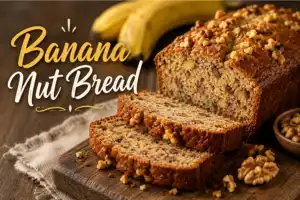
And then? Slice into it. Soft, moist, perfectly sweet, with deep banana flavor running all the way through.
Storage
- Room temperature in an airtight container: up to 3 days
- In the fridge: up to 5 days
- Frozen: up to 3 months — just thaw completely before eating
A Few Final Tips
- Riper bananas = better flavor. If they look too far gone to eat, they’re perfect for this.
- Measure the flour carefully. It’s the single most important variable in this recipe.
- Don’t overmix once the flour goes in. Mix until it just disappears, then stop.
- Toast your nuts before adding them. It takes five minutes and makes a huge difference.
- Room temperature ingredients cream together better and bake more evenly — eggs and butter both.
There’s a reason banana bread has been around for nearly a hundred years. It’s simple, it’s forgiving, it uses up what you have on hand, and it produces something genuinely wonderful every single time. Make it plain, make it with walnuts and chocolate chips, make it with whatever’s in your pantry.
However you make it, I really hope you get a chance to try it.