
Table of Contents
Here is a short video explaining the process, scroll down for detailed ingredients and step by step recipe method. Thanks for coming and do not forget to check other recipes on our homepage.
Let me ask you a question. Have you ever come across an ingredient that made you stop and think — where has this been my entire life? That’s exactly what happens the first time you make homemade harissa.
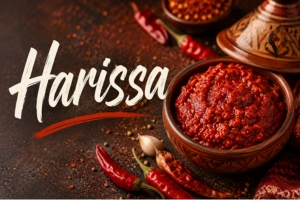
Harissa is a North African chili paste, and calling it “just a chili paste” is honestly doing it a disservice. It’s smoky, earthy, rich, and deeply flavorful in a way that’s hard to describe until you’ve actually tasted it. And the best part? Once you have a jar of it sitting in your fridge, you’re going to find yourself reaching for it constantly — on everything. This is one of those recipes that sounds more complicated than it is. Let’s break it down step by step.
First, Let’s Talk Peppers
There’s more than one way to make harissa. You can use dried chili pods, fresh ones, or a mix of both. Today we’re going with the dried pod route, which gives you that deep, complex flavor harissa is known for.
Here’s a great starting combination:
- 6 ancho peppers
- 6 guajillo peppers
- 3 pasilla peppers
- A few chili de árbol (these bring the heat — leave them out if you want something milder, or throw in extra if you like it spicy)
New Mexican chilis are another great option if that’s what you have on hand. Honestly, harissa is a pretty forgiving recipe — the exact peppers you use will shape the flavor, so have fun with it.
Step 1: Prep Your Dried Peppers
Before anything else, you need to deseed and stem your dried chilis.
The stems just pop right off — easy. Then give the pods a shake to get the seeds out. If they’re being stubborn and not opening up properly, just grab a pair of kitchen scissors and slice them open a little. The seeds will fly out (fair warning — they really will fly).
Do you have to get every single seed? No. But it’s worth removing most of them. Seeds can be bitter, and they tend to float around in your finished sauce in a way that’s not super pleasant. So take a few minutes here — it’s worth it.
Step 2: Toast the Peppers (Don’t Skip This)
Heat a dry pan to medium and add all your prepped peppers. No oil — just a dry toast for about one to two minutes per side.
You’ll know they’re ready when they start to puff up slightly, change color a little, and you can smell that incredible aroma coming off them.
One thing to watch: don’t burn them. Burnt peppers turn bitter, and that will follow through into your finished harissa. Light and fragrant is what you’re after.
Technically you can skip this step and jump straight to soaking. But toasting loosens up the oils in the pepper skins and adds a whole extra layer of depth and complexity to the flavor. It only takes a few minutes and it makes a real difference. Highly recommended.
Step 3: Soak the Peppers
Once your peppers are toasted, transfer them to a bowl and pour very hot water over them — just enough to cover. Then let them sit and soak for about 20 minutes until they’re completely soft and rehydrated.
While that’s happening, you’ve got time to work on the spices.
Step 4: Toast and Grind Your Spices
In the same dry pan (still hot from the peppers), toast:
- ½ teaspoon caraway seeds
- ¼ teaspoon coriander seeds
- ¼ teaspoon cumin seeds
Toast these for just 30 seconds to a minute. You’ll smell them almost immediately — that’s your cue. Again, don’t burn them.
Transfer the toasted seeds to a mortar and pestle or a spice grinder and grind them up into a fine powder. A spice grinder is quick and easy, but there’s something really satisfying about doing it in a mortar and pestle if you have one.
Set the ground spices aside.
Step 5: Blend Everything Together
By now your peppers should be nice and soft. Drain them — you don’t need to save the soaking water for this recipe — and add them to a food processor along with:
- Your ground toasted spices
- 1 teaspoon of salt (a little more if you like)
- 6 cloves of fresh garlic (or more — totally up to you)
- Juice of one lemon
At this point, you already have a solid harissa. But here’s where you can make it your own.
Two additions that take it to the next level:
- A roasted red bell pepper — adds sweetness, extra body, and a beautiful depth of flavor
- Tomato paste — some cooks love it, some skip it, but it adds a rich, savory backbone that’s really lovely
Fresh mint is also a traditional addition in some versions — if you want to try it, throw in a handful.
Process everything until it forms a thick paste.
Step 6: Stream in the Olive Oil
With the food processor running, drizzle in about 3 tablespoons of olive oil. This helps emulsify the paste and gives it that glossy, thick, rich texture that makes harissa so satisfying to look at — and eat.
You can add a little more oil if you want a slightly looser consistency.
Step 7: Strain It (Optional, But Worth Knowing About)
If you want an ultra-smooth harissa, pass it through a food mill or fine mesh strainer. This removes any leftover bits of pepper skin that didn’t fully blend down. If your food processor is a good one, you might not need this step at all — but it will give you a noticeably silkier texture if you do it.
Either way, what you’re left with is a gorgeous, deep red, incredibly aromatic chili paste that smells like something you’d find in a market in Tunis or Marrakech.
So, What Do You Do With Harissa?
This is the fun part. Harissa is one of the most versatile things you can have in your fridge. Here are just a few ways to use it:
- Stir it into soups and stews as a flavor builder — a spoonful completely transforms a broth
- Use it as a sauce — thin it with a little liquid and drizzle it over everything
- Rub it on meats before grilling — chicken, lamb, beef, all incredible
- Pair it with fish — harissa and fish is a classic combination and it works beautifully
- Swirl it into yogurt for a quick dip
- Spread it on sandwiches and wraps for an instant flavor upgrade
- Mix it into eggs — trust me on this one
Once you start cooking with harissa regularly, you’ll find yourself adding it to things you never expected. It becomes one of those ingredients you just always want on hand.
A Few Final Notes
Harissa keeps well in the fridge — store it in a sealed jar with a thin layer of olive oil on top to keep it fresh, and it’ll last you a couple of weeks easily.
The recipe varies a lot from region to region and cook to cook, so don’t feel locked into any one version. Think of this as your starting point and then adjust from there. More garlic? Go for it. Extra heat? Add more chili de árbol. Want it smokier? Lean into the ancho peppers.
That’s the beauty of making it yourself. You get to make it exactly the way you like it.
Now make a batch, taste it, and then immediately start thinking about what you’re going to put it on first.